amphibians

Cross the street safely for common toadsfor grass frogsfor newtsevery spring

Every spring, thousands of frogs, toads, and newts make their way to their breeding ponds, many crossing roads. SUST volunteers collect them at the amphibian fences and carry them safely across.

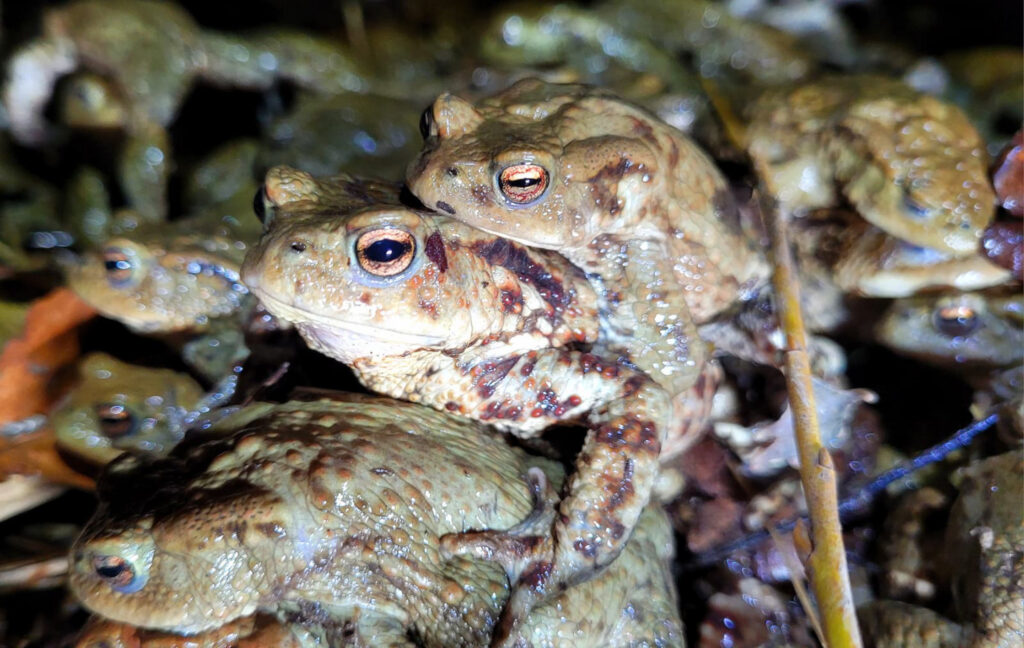
Several common toads are sitting close together in the leaf litter.
A dangerous honeymoon

On the way to the spawning grounds

Frogs, toads, and newts hibernate on land. In spring, they emerge from their winter dormancy and migrate to their breeding ponds, traveling throughout the night, usually between 7 pm and 19 am, when humidity is high and temperatures are above about 5 degrees Celsius.

Around five million amphibians embark on this journey every year, covering distances ranging from a few hundred meters to several kilometers. Because they travel in such large numbers, they are also run over in large numbers on the roads: many hundreds of thousands of animals pay for the migration with their lives.
In action

Late at night and early in the morning at the fence

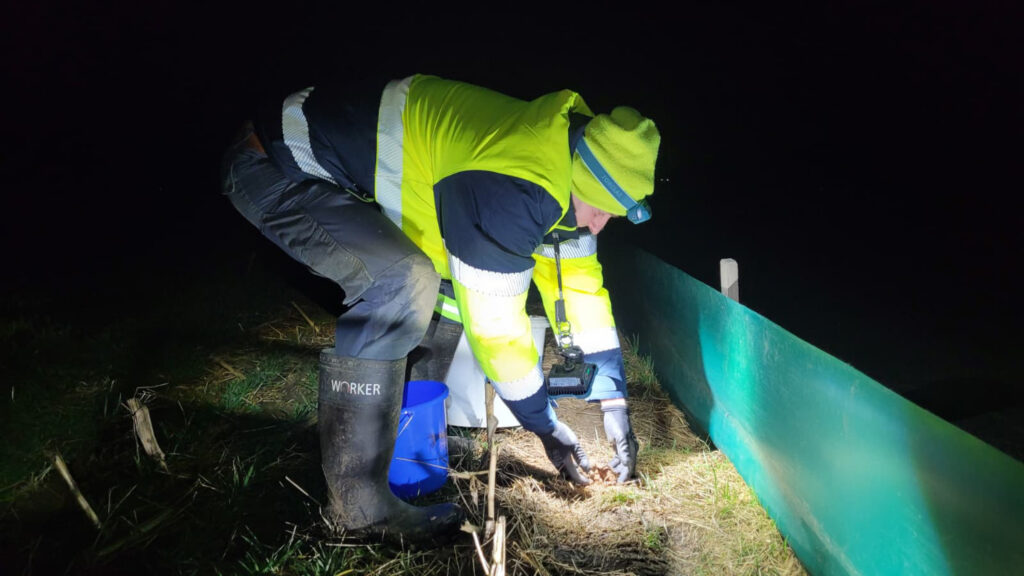
Every year, SUST volunteers check amphibian fences, collect grass frogs, common toads and newts from the buckets and take them to their spawning waters.

  • A volunteer in a high-visibility vest leans over a green amphibian fence at night.
    SUST volunteers collect the migrating amphibians along the fence.
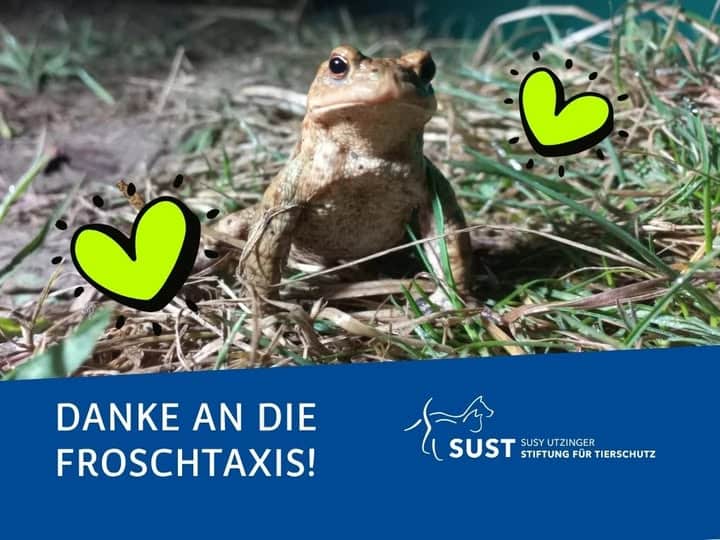
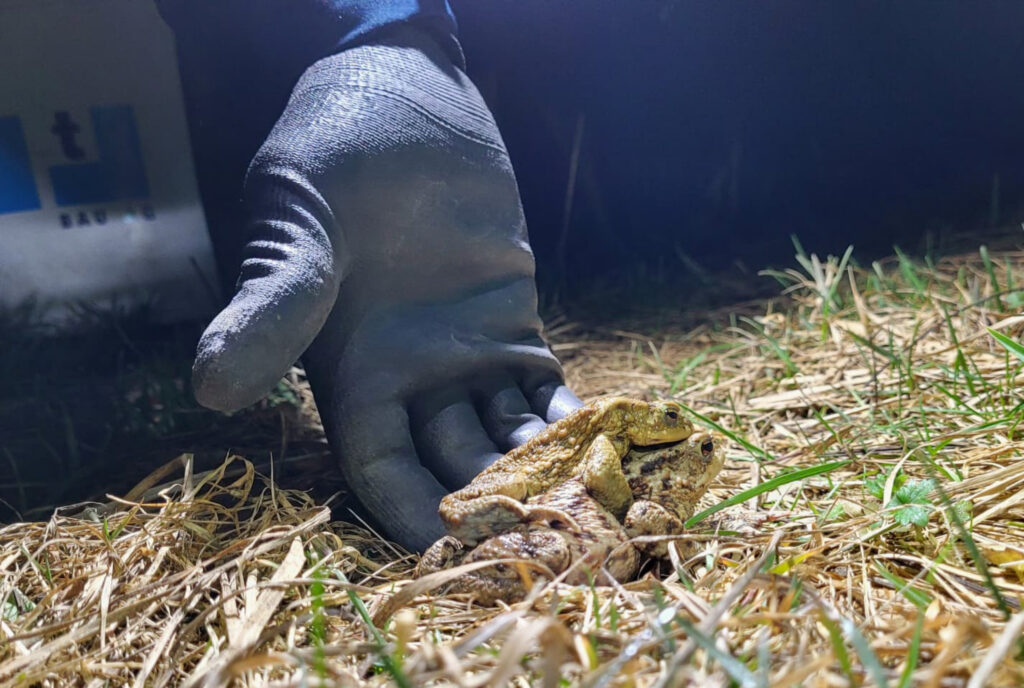
  • A gloved hand carefully lifts a toad from the ground.
    Frog taxi: The animals are carefully picked up
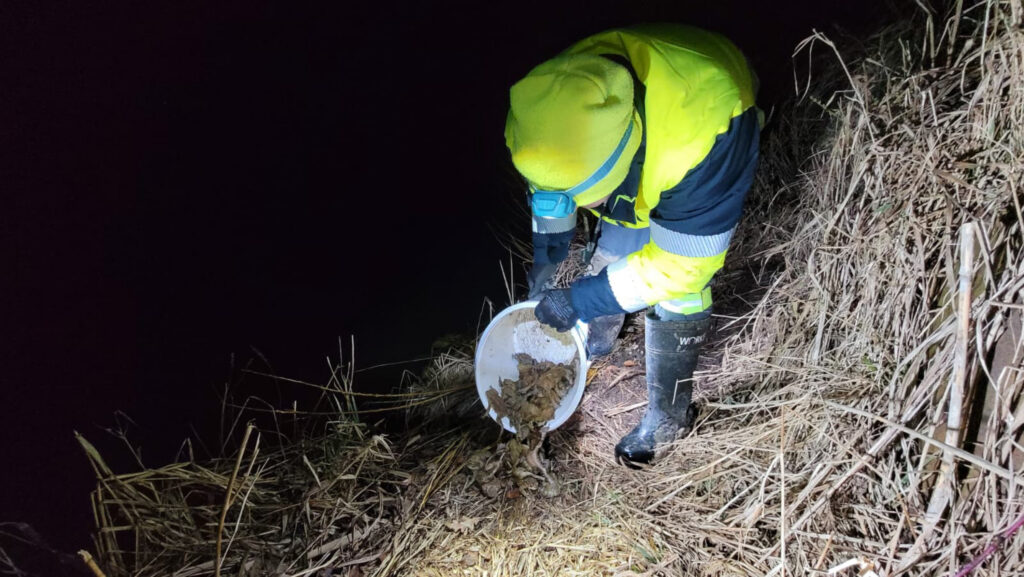
  • A helper empties a bucket of amphibians onto the riverbank at night.
    The amphibians are released at the spawning waters.
What you can do yourself

Save many lives with minimal effort

Despite fences, many amphibians end up on the road every year. Their lives depend on the behavior of every single driver.

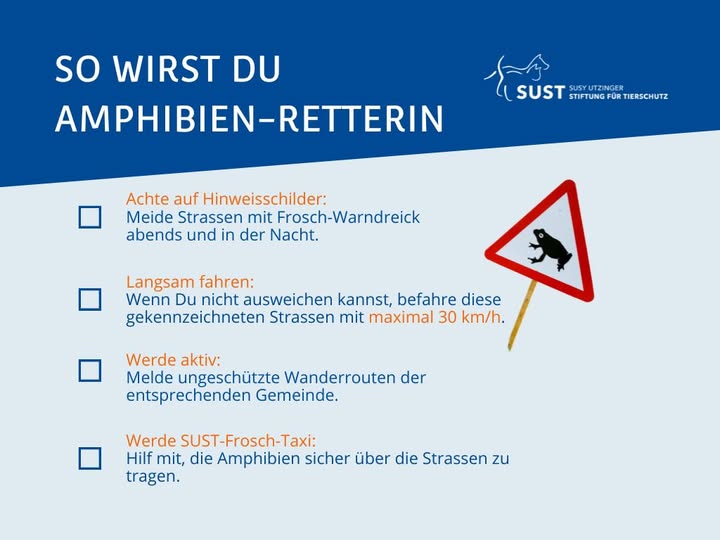
1

Pay attention to the signs

Avoid roads marked with the frog warning triangle in the evenings and at night if possible.

2

Drive slowly

Amphibians are usually killed by the low pressure at speeds above 40 km/h, even if the wheel doesn't actually hit them. If there's no alternative route, slow down considerably.

3

inform the community

If you see many animals run over on an unprotected stretch of road, report it to the local council and ask if any measures are planned.

4

Frog taxi

Every year, animal lovers, students and other volunteers in Switzerland safely carry hundreds of thousands of amphibians across the road.

A woman in rubber boots empties a blue bucket on the bank of a body of water.
Volunteers needed

Helping hands at the train stations

At around 200 locations in Switzerland, volunteers safely carry over 160,000 amphibians across roads to their breeding ponds each year. Volunteers are still needed for several of these migration sites.

Volunteers empty the buckets into which the animals fall at the fence and carry them across the road. Checks are usually carried out in the morning at daybreak, sometimes also in the evening after dusk. Depending on the weather, the crossing points are monitored for several weeks.

The list of train stations is maintained by the national data center info fauna.

Reports

From the amphibian migration

When the migration begins, how the season went and who helped with the fences: Here the SUST reports from the train stations.

This year's amphibian migration at Brauiweiher has come to an end.

Attention: Amphibian migration!

Thanks for the TV segment, @diistop!

Shopping Cart